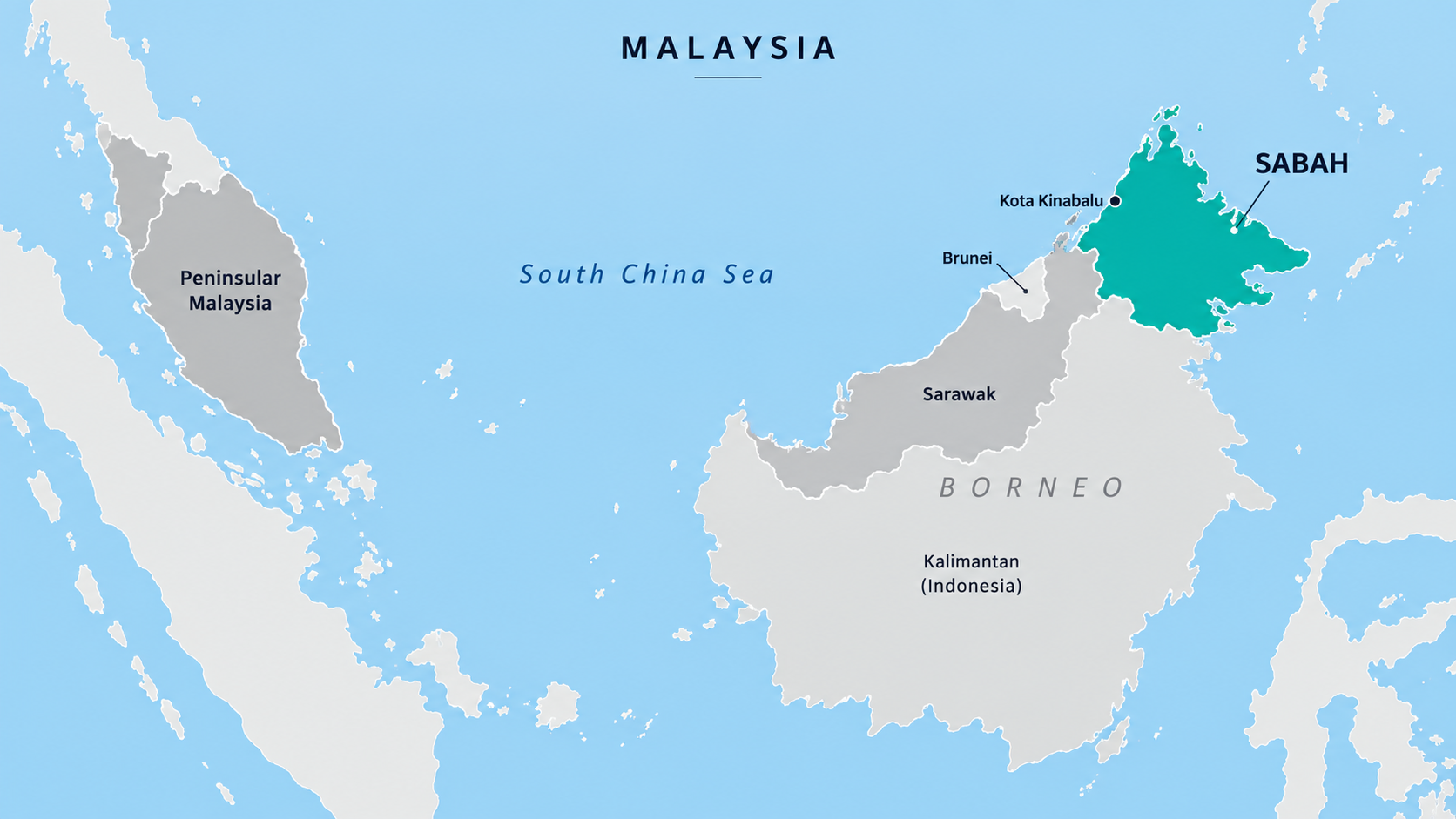
Sabah is one of Malaysia’s 13 states, located in the northern part of the island of Borneo. It shares this island with the Malaysian state of Sarawak, the country of Brunei, and Kalimantan, the Indonesian part of Borneo.
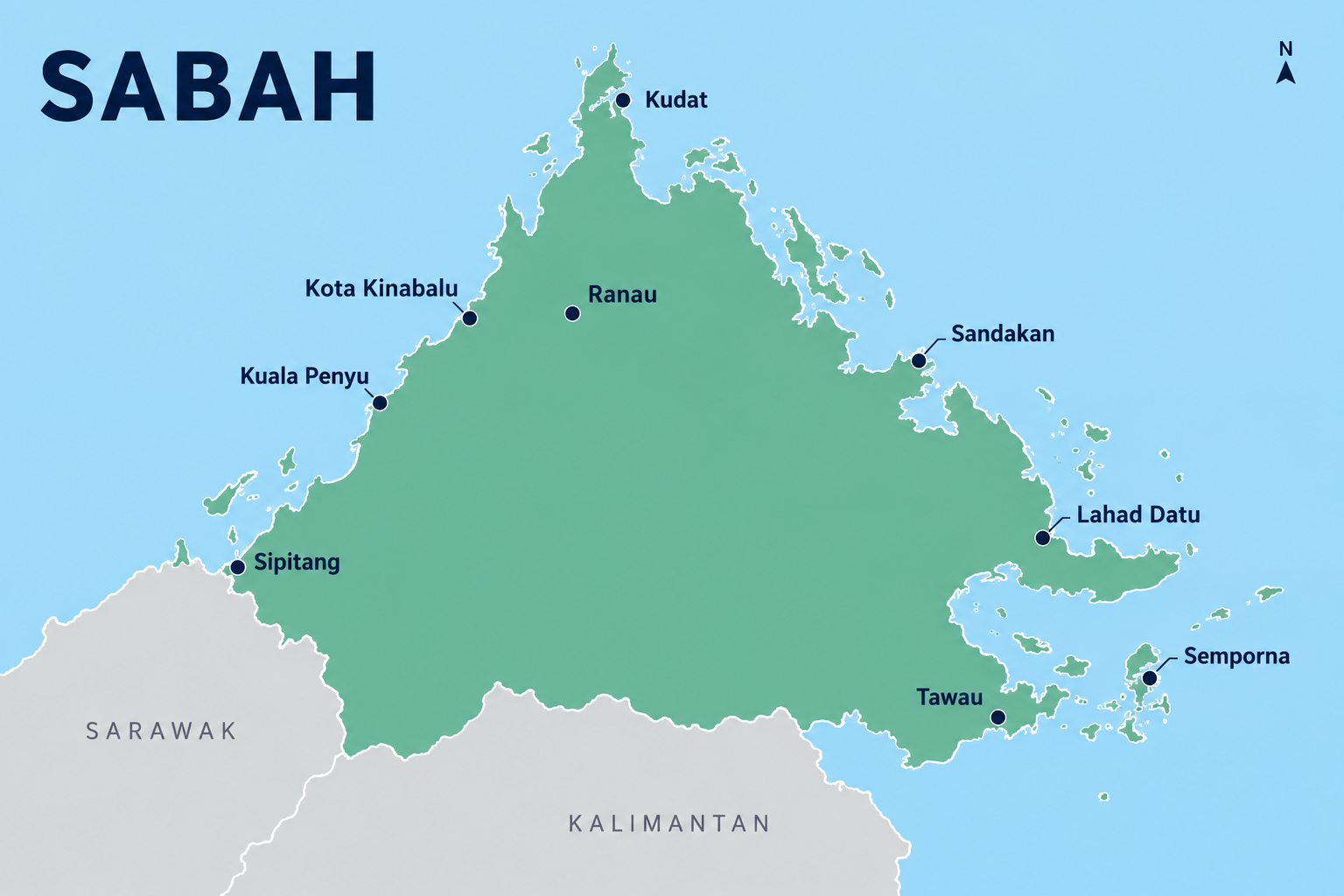
Its capital is Kota Kinabalu, often called KK. Located on Sabah’s west coast, it is a starting point for many visitors exploring the state. Other major towns include Sandakan, Tawau and Lahad Datu, each offering a different introduction to life in Sabah.
The People Who Make Sabah
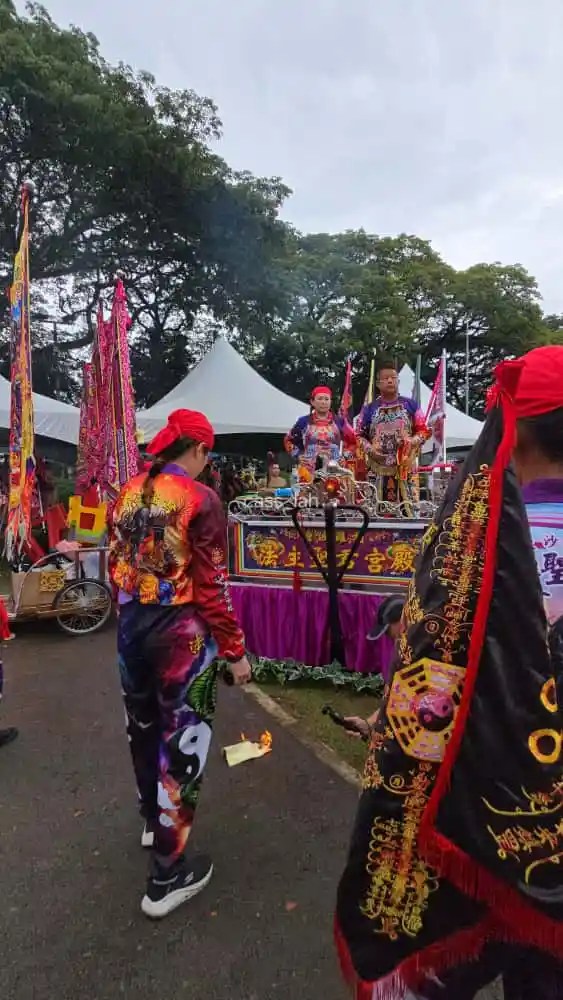
Sabah is home to more than 30 indigenous groups, alongside Chinese and other communities. Among its indigenous peoples are the Kadazan-Dusun, Bajau and Murut, with distinct traditions, languages and cultural identities.
From Mountains to the Sea
Known as the “Land Below the Wind,” Sabah offers landscapes that range from mountain highlands to tropical rainforests and offshore islands.
What amazes me about Sabah is the diversity of our landscapes. Within one state, you can explore tropical islands, cool mountain highlands, ancient rainforests and marine habitats teeming with life.
And from Kota Kinabalu, some of these experiences are surprisingly close:
- Arrive close to the city. Kota Kinabalu International Airport is approximately 8–9 kilometres from the city centre, making it a convenient starting point for your journey.
- Escape to the islands. The islands of Tunku Abdul Rahman Park are around 15–20 minutes by speedboat from Jesselton Point in the city centre.
- Head into the highlands. Around 90 kilometres from Kota Kinabalu, Kinabalu Park is home to Mount Kinabalu, Malaysia’s highest mountain, standing at 4,095.2 metres above sea level.
- Explore ancient rainforest. Over in eastern Sabah, inland from Lahad Datu, Danum Valley protects a remarkable expanse of primary tropical rainforest, with towering trees and a rich ecosystem.
- Discover an underwater world. Off Sabah’s southeastern coast, Sipadan is celebrated for its rich marine life, from green and hawksbill turtles to swirling schools of barracuda and trevally.


Leave a Reply